Recent Study Examining Why 25 Antarctic Expedition Guides Quit
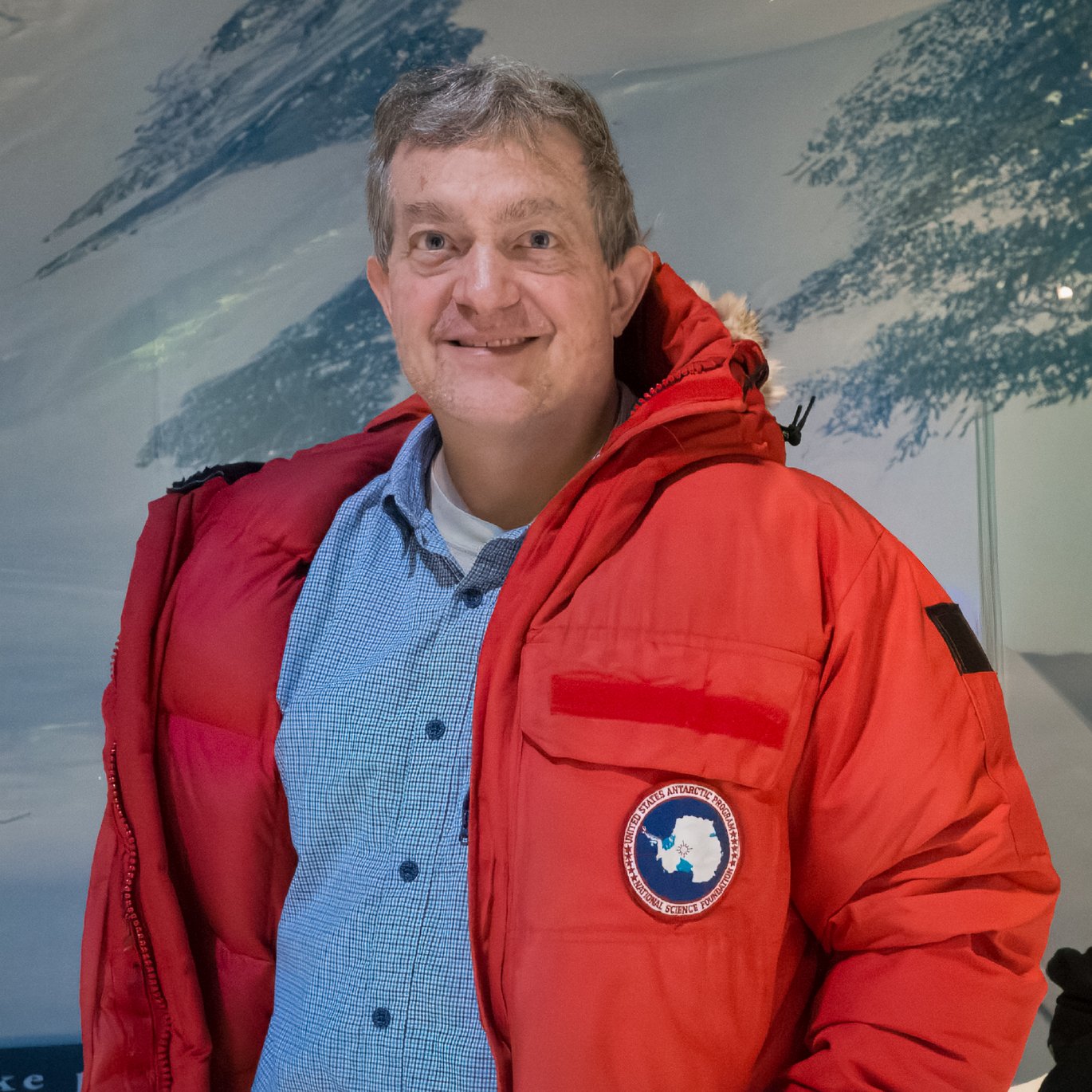
Photo of the Author: International Antarctic Centre, Christchurch, New Zealand
Mind the gaps: The moral journey of tour guides who quit
This study was co-authored by researchers Zdenka Sokolíčková, Elizabeth Cooper, and Christy Hehir. It examines why expedition guides quit their jobs in the environmentally fragile Antarctica tourist destination. 25 former guides were interviewed to determine why they left. See: Sokolíčková, Z., Cooper, E., & Hehir, C. (2026). Mind the gaps: The moral journey of tour guides who quit. Annals of Tourism Research, 119, 104237. doi.org
The predominant reason cited was feeling morally conflicted by facilitating tourism that the guide felt was environmentally harmful.
While the paper focuses on how the guides progressed from their recognition of a compliance or ethical problem to making a personal decision to quit, the underlying environmental concerns were not completely listed or analyzed. Nonetheless, we are told the list includes global climate change, local environmental impacts, wildlife disturbance, noise pollution and the spread of microplastics. The authors cite studies suggesting that tour operators often focus on less significant public-facing sustainability actions like reducing onboard water use or reusing towels while giving minimal attention to the higher ranked environmental risks where they operate. One of the studies argues for greater regulation or even the prohibition of Antarctica tourism.
The International Association of Antarctica Tour Operators (IAATO) acknowledged that the experiences of the former guides are valid and that the difficult choices they made to leave the industry deserve interest and respect. They added that the study adds a valuable human dimension to conversations that usually focus only on hard numbers and regulations. But, IAATO pointed out that the study focused on a small sample and is not necessarily representative of the broader Antarctic guiding community. IAATO highlighted that there are 6,605 active guides in the Antarctic community noting that many guides continue working because they firmly believe that carefully managed, responsible expedition tourism actively contributes to the preservation of Antarctica.
Opportunities for Improvement
So, what is the “Silver Lining?” Are there any gaps to address? How can Antarctica Tourism Risk Management be improved? Here are some potential answers:
Enhanced Regulation of Antarctic Tourism
While Antarctic tourism has thrived under self-regulation for decades, the governing body of the Antarctic Treaty System is debating the environmental concerns that drove expedition guides to quit. At the recent Antarctic Treaty Consultative Meeting (ATCM) some members pushed for caps along with enhanced regulation. Geopolitical consensus has not been reached on the topic, but there is increasing awareness that growing Antarctic tourism presents risks that may need to be addressed via new domestic regulation within the context of the Antarctica Treaty System framework.
Enhanced Transparency and Stakeholder Involvement in Antarctic Treaty Authorizations
Ships sailing to Antarctica must obtain authorization from a Competent Authority (Party) of the Antarctic Treaty. Each Party is responsible for regulating visits to the Antarctic organized by its nationals, and the Environmental Protocol requires an Environmental Impact Assessment of all activities south of 60°S. The Competent Authority could be the ship’s flag state (examples: UK, Netherlands, etc.) or the country where the visit is planned and organized (example: USA)
Cruise and expedition ships seeking authorization from the USA are required to comply with permitting requirements established under the US Antarctic Science, Tourism, and Conservation Act of 1996. Most standard cruise ship itineraries and expeditions are deemed to have a "minor or transitory impact" on the environment with no statutory requirement for a public comment period on an IEE. The public only gets to view these documents after they have been submitted, cleared, and archived in the Antarctic Treaty Secretariat (ATS) Database or the EPA Antarctica Portal.
Perhaps the definition of "minor or transitory impact" could be changed so that these activities fall under the Comprehensive Environmental Evaluation (CEE) requirements instead of an IEE, to trigger a public comment period. That sort of stakeholder involvement in the process could enhance the authorization process to ensure that environmental risks associated with cruise and expedition tourism are identified and adequately mitigated.
Minimum Standards for an Initial Environmental Evaluation (IEE) in the US
40 CFR Part 8 regulations specify that an IEE must be submitted to the US Environmental Protection Agency (EPA) for approval and the IEE must address potential adverse effects on the environment, including impacts on atmospheric, terrestrial, glacial, and marine ecosystems. It should evaluate potential harm to species distribution, abundance, and productivity, with a focus on endangered or threatened species, and consider any highly uncertain environmental effects or unique risks associated with the proposed activities. An IEE needs to address potential impacts associated with ship discharges (grey water, sewage, bilge water, food waste, ballast water, etc.), air emissions from engines and waste incinerators, biofouling, zodiac and kayak excursions, polar plunges, wildlife encounters, drone operations, etc.
The global standards for conducting an Initial Environmental Evaluation (IEE) are the ATCM Guidelines for Environmental Impact Assessment in Antarctica, with the most recent standard adopted by the 48th Antarctic Treaty Consultative Meeting (ATCM) in Resolution 1 (2026). These guidelines provide the operational framework for executing the obligations set out in Annex I of the Protocol on Environmental Protection to the Antarctic Treaty (the Madrid Protocol). Nonetheless, 40 CFR Part 8 does not specifically reference the ATCM guidelines, and it is foreseeable that an IEE could comply with 40 CFR Part 8 while failing to comply with the ATCM Guidelines.
A robust IEE in compliance with both the 40 CFR Part 8 requirements and the ATCM Guidelines could address the environmental concerns raised by the expedition guides. Governance systems should be in place to ensure that is the case.
Minimum Standards for the Ship Environmental Officer (EO) Compliance Monitoring Role in Antarctica
On cruise and expedition ships operating in Antarctica, there are no global standards dictating what role, if any, the EO performs to ensure compliance with all IEE, IAATO, Polar Code, and ATCM environmental requirements. On some ships the EO may be limited to monitoring compliance with general MARPOL requirements with all Antarctica-specific compliance vested in an Expedition Leader alone. Comprehensive compliance monitoring by the ship EO would act as a powerful compliance safeguard to address potential adverse impacts to fragile Antarctic ecosystems and ensure that wildlife monitoring and ship ice landings align with Antarctica requirements. That approach could significantly mitigate the compliance risks identified in the study.
The ship Environmental Officer (EO) position is not prescribed by SOLAS, MARPOL, or Flag State requirements. It is a "loosely defined set of practices" that has been significantly shaped by government enforcement actions in the United States. US Courts have imposed an expectation that EOs maintain zero operational duties onboard. A global standard for the EO role is needed. Global minimum standards for the role could be established via an IMO adopted Environmental Officer Guidelines document.
Routine Compliance Audits
The International Association of Antarctica Tour Operators (IAATO) operates a mandatory observer scheme to audit the activities of cruise and expedition ships. Any company applying to join IAATO must carry an approved observer on board for a full evaluation during their very first season of operation in Antarctica. Passing this field observation is required to move from "Provisional Operator" to full voting "Member" status.
For existing operators, IAATO enforces a mandatory five-year observation cycle. Every active cruise ship, commercial yacht, deep-field camp, and air operator must be audited at least once every five years to monitor, audit, and verify that tour operators strictly comply with environmental regulations and IAATO guidelines in the field.
Antarctic Cruise and Expedition operators should not rely on IAATO audits once five years alone for ensuring compliance. They should be conducting annual robust Antarctic compliance audits of their own to ensure compliance with not only company procedures, but compliance and procedural alignment with IEE, IAATO, Polar Code, and ATCM requirements. Company audits could significantly mitigate the compliance risks identified in the study.
Enterprise Risk Management Systems
The US Department of Justice (DOJ) Criminal Division guidance, “Evaluation of Corporate Compliance Programs”, has served as benchmark for corporate compliance programs. The risk management criteria in the guidance requires that the environmental compliance program be based upon a risk management system focusing greater attention and resources on the highest ranked risks. A dynamic Enterprise Risk Management (ERM) system covering Cruise and Expedition tourism is essential to mitigate the compliance risks identified in the study.
Conclusions
I personally align with the belief that carefully managed, responsible expedition tourism actively contributes to the preservation of Antarctica. People must be able to see, experience, and personally connect with places that need to be protected; however, it is essential that those encounters be carefully regulated and that associated risks be carefully monitored and mitigated.
If we fail to address the concerns presented, the right to visit these special places could be jeopardized.