PRIMARIUM Regulatory Horizon Update: Evolving Microplastic Mandates & Cruise Compliance Signals
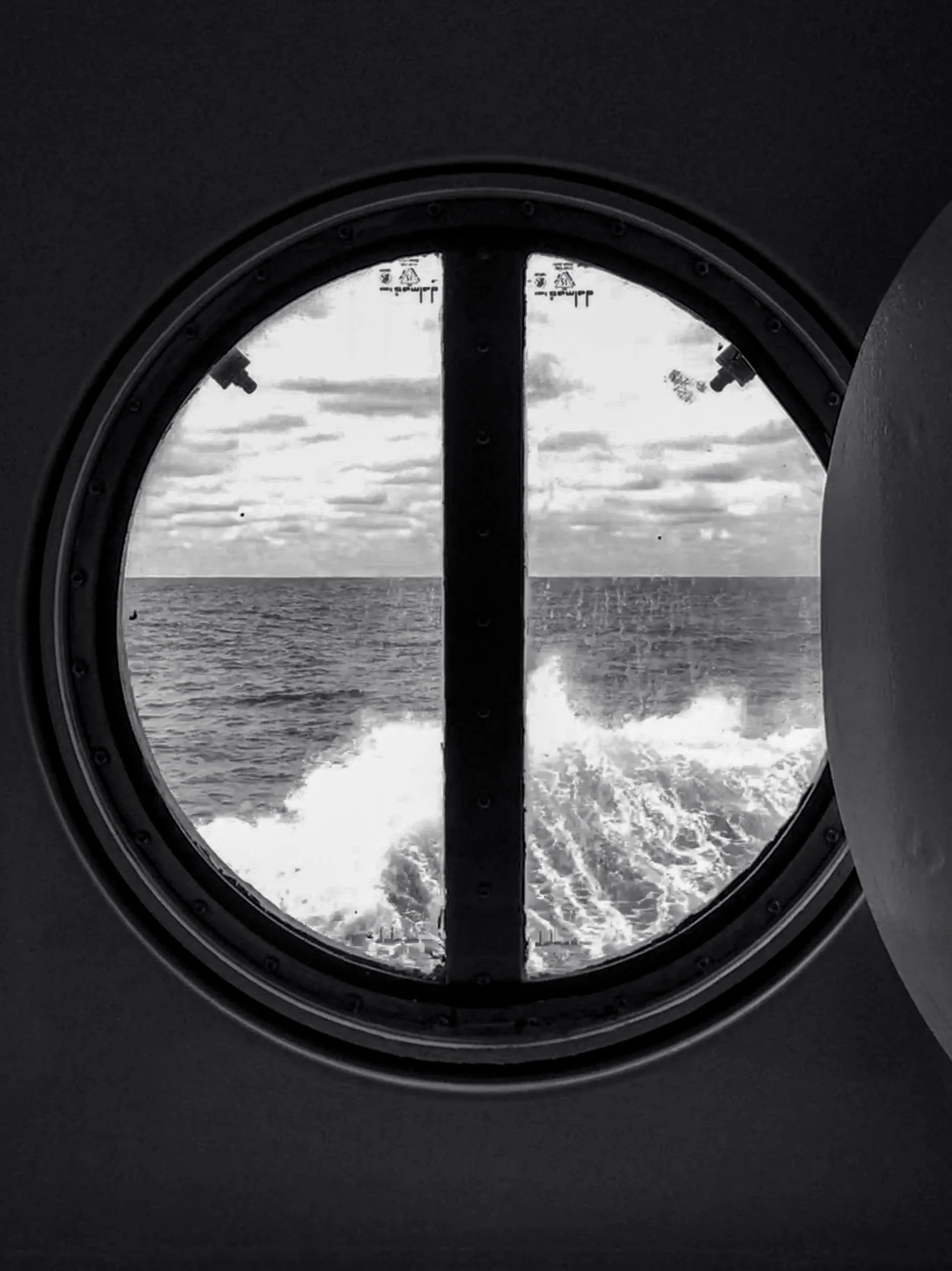
“The Horizon” / Photo - D. Smith
This regulatory horizon update focuses on the evolving regulation of microplastics within laundry wastewater and the emerging regulatory compliance signals for the cruise industry.
🌍 Domestic Regulation of Microplastics in Laundry Wastewater
France is currently the only nation that regulates microplastics within laundry wastewater discharges. All new household washing machines sold in France must be equipped with a microplastic filter. Environmental groups and industry experts are pushing for the European Commission to update the EU Ecodesign Regulation for Washing Machines to require a mandatory 90% microplastic capture rate for all new household machines.
Domestically, the California legislature passed a bill requiring new washing machines to have microfiber filters; however, it was vetoed by the governor due to cost and research concerns. Lawmakers in Canada and the UK have also debated proposed bills to require washing machine microplastic filters.
🇺🇸 US Federal Drinking Water Oversight (UCMR 6 & CCL 6)
The Safe Drinking Water Act (SDWA) requires that once every five years the EPA issue a list of unregulated contaminants to be monitored by public water systems. On November 26, 2025, the Governors of 7 states petitioned the EPA to include microplastics in the sixth Unregulated Contaminant Monitoring Rule (UCMR 6), which the EPA subsequently proposed on July 1, 2026, for public comment.
The EPA declined the governors' petition to add microplastics to the active monitoring list, citing the absence of a validated test method, but noted that this decision was not due to a lack of concern. Crucially, the EPA instead placed microplastics on its draft Sixth Contaminant Candidate List (CCL 6), a mechanism designed to drive federal research and standardize analytical methods. As the EPA noted, this is a timing issue: "The EPA will collaborate with other federal agencies to evaluate risks... This approach will also enable the EPA to list microplastics on a future UCMR when national monitoring is scientifically feasible."
⚓ Maritime Policy Risks & Ship Grey Water Discharges
The International Maritime Organization (IMO) aspires to achieve zero plastic waste discharges to sea from ships by 2030. That milestone cannot be reached unless microplastics in ship laundry water are directly addressed.
Research shows that laundry water from cruise ships is a significant source of microplastics (see: Folbert MEF, Corbin C and Löhr AJ (2022) Sources and Leakages of Microplastics in Cruise Ship Wastewater). As synthetic clothing is washed onboard, heat and abrasive detergents promote the release of microplastics. Water-soluble polyvinyl alcohol (PVA/PVOH) laundry detergent pods may be an additional contributor to microplastic loading.
Under international maritime law, cruise ship laundry water is classified as grey water. Grey water is not directly regulated under MARPOL; it is defined as drainage from dishwater, galley sink, shower, laundry, bath, and washbasin drains (see IMO Resolution MEPC.227(64)). Grey water is only regulated under MARPOL as sewage when it is mixed with drainage from toilets & urinals (see Regulation 1.3 of MARPOL Annex IV).
However, operators must remain cautious: the MARPOL Annex V blanket prohibition on "the discharge into the sea of all plastics" could foreseeably be interpreted to cover grey water that contains microplastics.
🎛️ Technology Adaptations & Industry Best Practice
On some ships, laundry wastewater is processed through an onboard Advanced Wastewater Treatment System (AWWTS) that can remove almost all microplastics before sewage permeate discharge under MARPOL Annex IV regulations. Nonetheless, the remaining “sewage sludge” or “bio-residuals” containing the captured microplastics may have to be offloaded shoreside to comply with MARPOL Annex V.
In an industry-first initiative announced by the TUI Group, Marella Cruises partnered with the Cleaner Seas Group to install specialized INDIKON microfiber filters across its entire five-ship fleet. This fleetwide rollout follows a successful six-month trial on the Marella Explorer that reports a 99% capture rate of microfibers, signaling the future of maritime compliance.