2026 Alaska Cruise Season Update: Mitigating Whale Strike Risks
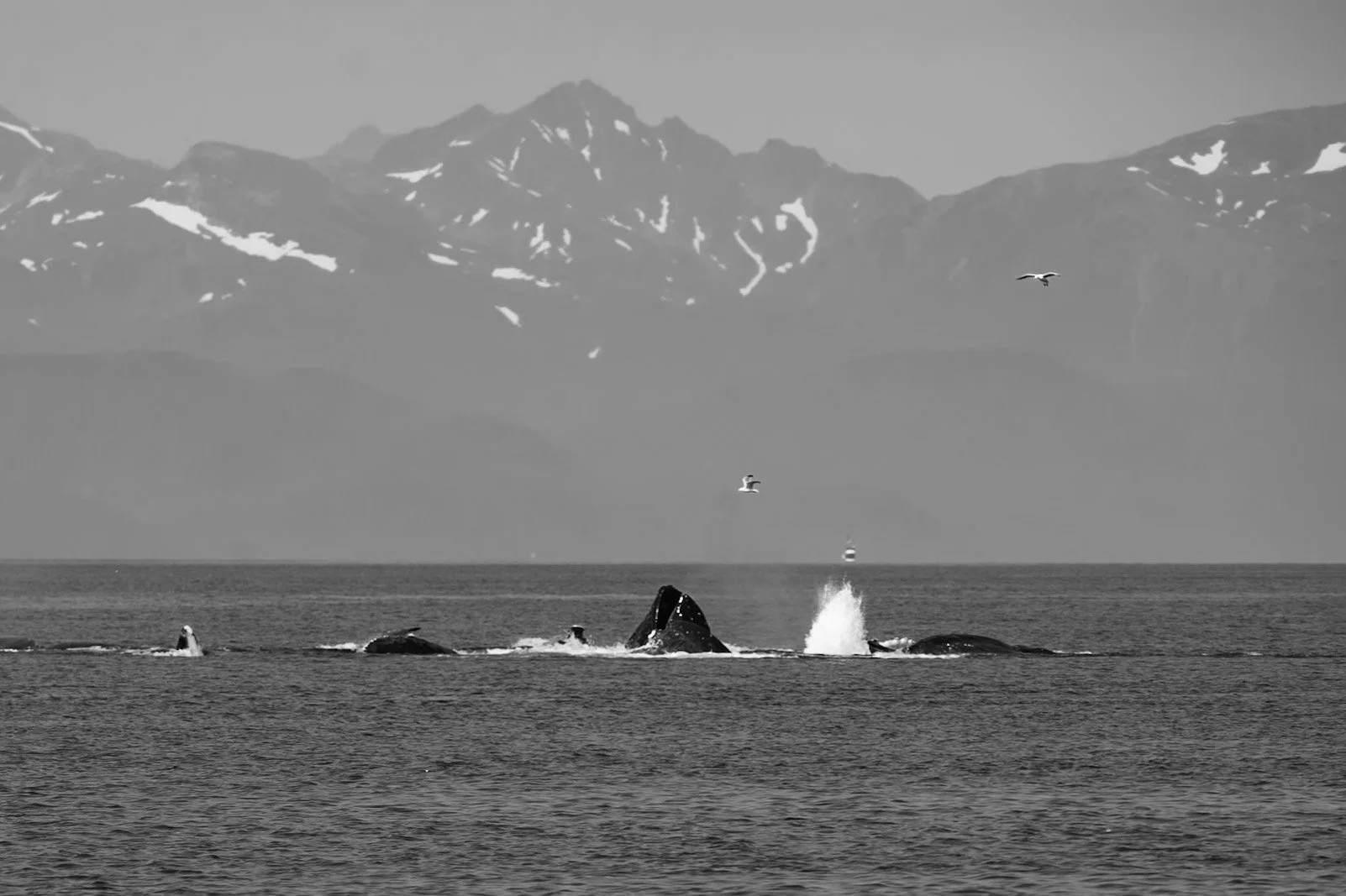
Whales near Juneau, Alaska - Photo by D. Smith
On Friday, June 19, 2026, a cruise ship arrived in Seward, Alaska, with a dead fin whale lodged on its bulbous bow. The 61-foot adult female was later confirmed by NOAA Fisheries to have been pregnant, and initial necropsy results indicated the death was caused by a vessel strike. Fin whales are listed as endangered under the Endangered Species Act and also protected under the federal Marine Mammal Protection Act. The NOAA Office of Law Enforcement is investigating the incident.
This is not the first time that a cruise ship has arrived in an Alaskan port with a dead fin whale affixed to its bow. An almost identical incident occurred in 2016. Fin whales are one of the largest animals on earth, second only to the blue whale. They weigh between 40 and 80 tons, are up to 85 feet long, and can live up to 90 years. Vessel strikes are a significant cause of whale mortalities.
PRIMARIUM posted an update on mitigating Ship Whale Strike Risks in February 2026.
Risk mitigation begins during the voyage planning process. It is a mistake to treat potential whale strikes as just another marine collision avoidance risk. That perspective tends to categorize the risk as a vessel safety issue where potential impacts are focused on the ship alone. It actually presents a broader compliance and public perception risk with potential external impacts that must be considered.
Sailing into a port with a whale affixed to a ship’s bow is a gruesome public image adversely affecting a company’s reputation. From a compliance perspective, vessel strikes that result in the death or injury of an endangered whale could result in large fines or even criminal prosecution under the ESA. Those environmental risks are far greater than the risk of marine collision alone.
Risk mitigation actually begins when a ship is designed. That is because vessel noise plays a highly destructive role in the survival of fin whales by creating a chronic "acoustic fog" that disrupts vital life functions. Fin whales rely almost exclusively on low-frequency sounds to navigate, find food, and interact with one another. Ships can mitigate adverse noise impacts on fin whales through advanced hull and propeller engineering during the design phase and via slower operations while sailing. The International Maritime Organization (IMO) actively coordinates a global Underwater Radiated Noise (URN) Action Plan to advance these mitigation methods.
The World Shipping Council (WSC) has published a Whale Chart that serves as a strategic voyage planning and execution compliance risk management tool to avoid whale strikes and comply with marine mammal protection requirements around the world. While some of the protective requirements it contains may be "voluntary" in certain locations, there can be significant compliance consequences in other locations where they are mandatory. Seasonal maximum vessel speed limits are established to mitigate the risk of vessel strikes.
This all raises a significant compliance question - what role should a ship Environmental Officer play in: (a) the identification and mitigation of whale strike risks during the voyage planning process; and (b) monitoring passage plan execution to ensure that mitigation strategies are being effectively implemented?
Best practices for avoiding whale strikes include:
Dedicated Marine Mammal Observers: Stationing crew members or third-party conservationists (such as the ORCA network) on the bridge with high-powered optics to spot whale blows and flukes.
Thermal Infrared Imaging: Forward-facing thermal cameras can automatically scan the ocean surface ahead of the ship, flagging the heat signatures of breathing whales even at night or in thick fog.
Active Steering Maneuvers: If a whale is spotted ahead, standard protocol dictates that the ship should make modest adjustments to steer behind the animal's direction of travel rather than trying to cross in front of its path.
Strict Vessel Speed Reduction (VSR): Maintaining speeds at or under 10 knots in aggregation areas reduces the risk of a fatal strike by up to 50%. It gives whales time to dive away and grants mariners a wider reaction window.
Voluntary Environmental Programs: Major cruise companies actively join localized protection programs—such as the Blue Whales and Blue Skies initiative in California or the ECHO Program in British Columbia—pledging to drop speeds through vulnerable zones.
Immediate Sightings Sharing: Utilizing specialized mobile apps and centralized mariner networks, cruise ships immediately broadcast localized whale coordinates to all other commercial ships in the vicinity.
However, shipboard risk management by Environmental Officers cannot happen in a vacuum. Ultimately, the management of whale strike risks must begin at the executive level with the company’s Chief Risk Officer (CRO) who is responsible for designing and maintaining an enterprise-wide framework used to identify, assess, treat, and monitor risks.
PRIMARIUM provided an overview of the Risk Management Process in April 2026.