White Paper on the Maritime Environmental Officer Role
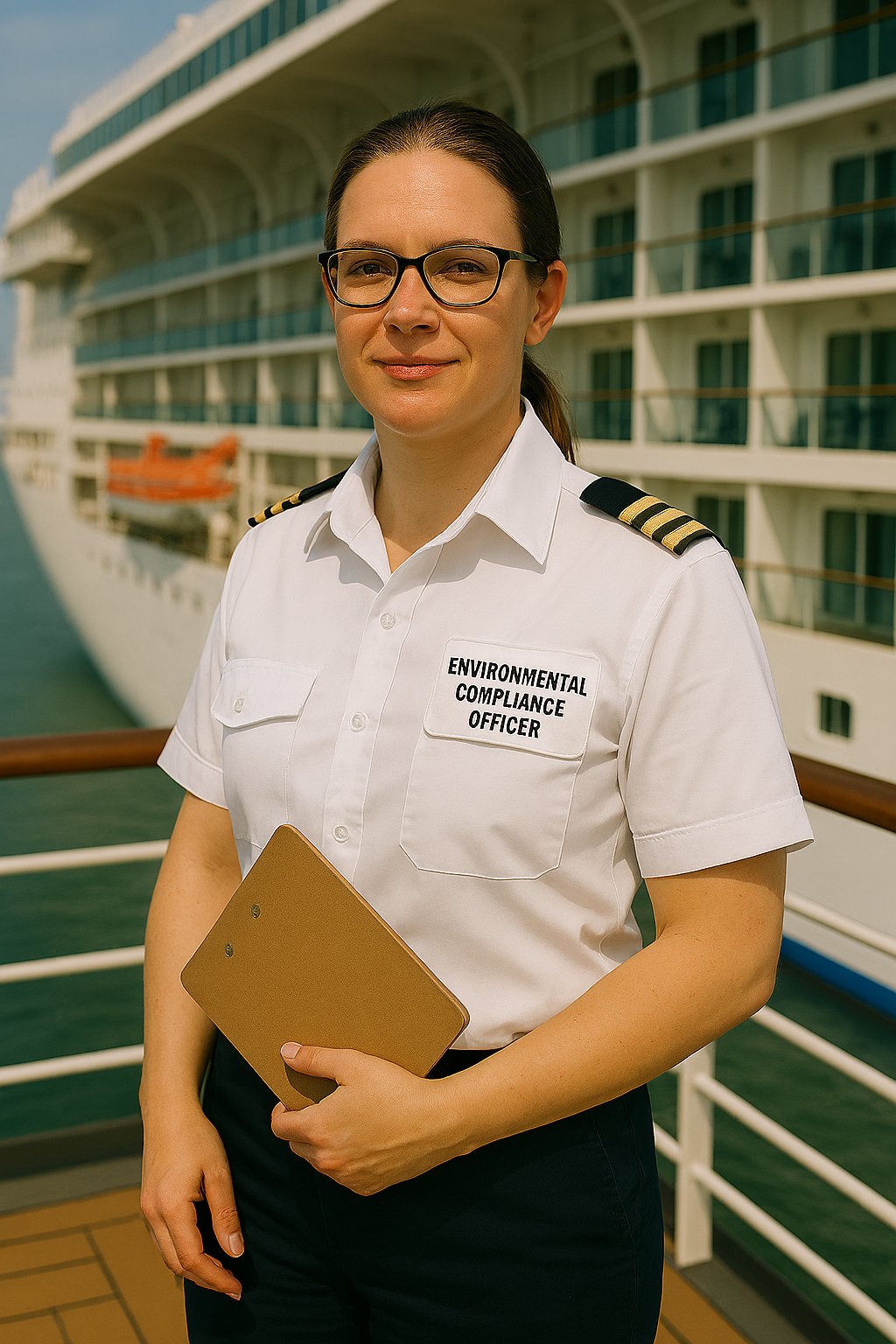
THE MARITIME ENVIRONMENTAL OFFICER
From Compliance Checker to Strategic Compliance Leader: A Roadmap for AI Integration, Rank Parity, and Enterprise Risk Management
EXECUTIVE SUMMARY
The maritime Environmental Officer (EO) role currently suffers from a "Groundhog Day" syndrome—a cycle of repetitive, retroactive checking that focuses on past enforcement actions while ignoring current environmental risks. This white paper argues for a fundamental evolution of the role from a compliance checker to a strategic sustainability leader. By integrating an Enterprise Risk Management (ERM) framework and "human-in-the-loop" Artificial Intelligence, organizations can move beyond manual data checking to address emerging compliance threats, such as biofouling and underwater radiated noise. Crucially, the paper outlines a roadmap for professional equity and the elimination of nationality-based pay disparities. Only by adopting global standards—via IMO or ISO—can the maritime industry transform the EO into a respected high-ranking officer capable of delivering strategic sustainability leadership.
While environmental compliance duties on cargo, bulker, and tanker ships are traditionally assigned to senior deck and technical officers, this paper focuses on the dedicated EO role within the cruise and expedition sectors, where the complexity of hotel operations and high-volume waste streams necessitates a specialized, standalone position.
PREFACE
The time has come for us to reimagine the EO role. The intent of this white paper is to challenge the status quo and provide novel ideas on how to deliver improved EO compliance value. It has often been said that “Insanity is doing the same thing over and over again and expecting different results.” In response to compliance failures, doing more of the same old things in an enhanced way, might only lead to EO burnout without improving compliance.
The EO position is not prescribed by SOLAS, MARPOL, or Flag State requirements. It is a "loosely defined set of practices" that has been significantly shaped by government enforcement actions in the United States. While specific responsibilities can vary, cruise and expedition companies generally define the EO as a senior, non-watch standing management role focused on regulatory compliance and the implementation of the company's Environmental Management System (EMS).
EOs should have a primary voice in any changes to their job description for not only buy-in, but because they know the job better than anyone else. Captains and Chief Engineers should also have more say on the role than shoreside “experts” who have never served as an EO. To that end, I requested feedback from ship officers for ideas on how to improve the EO role to deliver enhanced compliance value. This paper could foreseeably contribute to IMO, flag state and company compliance strategies. It could also inform the courts and DOJ as they consider what remedies to impose in the context of future enforcement actions.
After describing a typical current EO job, this paper explores opportunities to dramatically improve and transform the role by aligning it with an Enterprise Risk Management (ERM) system and using Artificial Intelligence (AI) to achieve strategic value.
PART I: Overview of the Current EO Role
Across major cruise lines, the EO role can be defined by the following categories of deliverables:
Compliance Monitoring: The primary duty is ensuring full adherence to international (MARPOL), national, and local environmental regulations. This includes monitoring waste operations, discharges, emissions, the accuracy of logbooks such as the Oil Record Book, and collecting representative discharge samples for analysis.
Advisory Role: The EO serves as the lead subject matter expert, advising the Captain, Chief Engineer, and department heads on environmental compliance.
Training and Shaping Culture: They are responsible for delivering shipboard environmental training to all crew members and fostering a compliance, sustainability, and ethical culture.
Incident Management: They may assist in managing accidental spills or releases and are responsible for reporting these incidents to both shipboard leadership and shoreside authorities.
Inspections: EOs have unrestricted access to all areas of the ship to conduct regular rounds and inspections, from the engine room to food preparation areas.
Expedition Ship Role: Often blends scientific expertise with operations; some roles may include delivering destination-specific lectures or acting as wildlife guards (e.g., polar bear watch) alongside environmental duties.
Small Luxury Ship Role: There is an emphasis on ensuring that environmental practices enhance rather than compromise the high-end guest experience. That may include professional guest interactions regarding sustainability with some brands. On luxury yachts or small high-end ships the EO role may be combined with safety functions.
The EO typically reports directly to the Captain while maintaining a secondary, direct reporting line to shoreside compliance managers to ensure independence from operational pressures. Unfortunately, ship officers and shoreside operational managers can sometimes view the EO as a “corporate spy” or as a “political officer”who they believe is only onboard to catch them doing something wrong. That perception has to be replaced so that the EO is seen as a valuable team member.
A day in the life of an EO can be a hectic blend of technical and voyage planning meetings, rounds, inspections, emission and discharge monitoring, waste management, checking record books and data trends, crew training, administrative tasks, and responding to a plethora of compliance issues that arise. While the core mission of MARPOL compliance is universal, the "brand flavor" dictates whether an EO spends more time in the engine room, engaging with crew and guests, or is part of an expedition team.
The technical qualifications for an EO vary depending on the brand's operational profile. While all EOs must master MARPOL and international maritime regulations, the specific entry pathways and required certifications can shift based on the company's needs. Larger ship brands often seek candidates with maritime backgrounds to better understand complex ship systems. Expedition brands often focus on educational backgrounds in environmental science or marine biology rather than a senior deck/engine rank. Certification in ISO 14001 Environmental Management Systems is highly valued by some brands. An STCW certificate (Standards of Training, Certification, and Watchkeeping) is a mandatory international seafarer qualification for all EOs. It verifies that the EO has completed basic safety training, covering firefighting, survival, and first aid. Some brands have rigorous internal training and certification requirements for EOs.
While “Environmental Officer” is the most common title for this important role, alternative titles, depending on brand-specific needs, can include “Environmental Compliance Officer” or have a more guest facing title like “Environmental Scientist.”
Contracts for Environmental Officers (EOs) are primarily shaped by a brand’s internal rotation policies and the labor laws of the vessel's flag state. Some brand contracts require four months onboard followed by two months leave. Others require three months on and three months off. Regardless of brand, the standard seven-day work week is approximately 72 hours, with a 10-hour rest requirement per 24-hour period to meet international labor standards. The EO salary can range from approximately $43,000 to $73,000 per year depending on the brand.
Here is a non-exhaustive list of requirements that may or may not fall under the EO compliance monitoring “umbrella”:
• US Marine Mammal Protection Act
• US Resource Conservation and Recovery Act (RCRA)
• CERCLA (Potential Liabilities Related to Waste Disposal in US)
• Domestic Laws Regulating or Prohibiting Exhaust Gas Cleaning System (EGCS) Discharges
• Domestic Laws Regulating Biofouling
• Domestic Laws Regulating or Preventing a Wide-Range of Ship Emissions and Discharges
• US Oil Pollution Act of 1990 (OPA)
• IAATO & AECO Polar Region Guidelines
• ISM Code
• UN Convention on the Law of the Sea (UNCLOS)
• MARPOL Annex I Oil Pollution Regulations
• MARPOL Annex IV Sewage Regulations
• MARPOL Annex V Garbage Regulations
• MARPOL Annex VI Air Emissions Regulations
• Ballast Water Management Convention
• The Polar Code
• Antarctic Treaty System Permit Requirements
• IMO Biofouling Guidelines
• US Clean Water Act: the Vessel General Permit and the US Vessel Incidental Discharge Act (VIDA)
• US Clean Air Act
• US Endangered Species Act
PART II: Reinventing the EO Role
The current EO role may be “stuck in a rut” akin to the 1993 movie – “Groundhog Day” with a paradigm of monotonously doing the same things over and over day after day. Court ordered Environmental Compliance Plans (ECPs) and court-appointed monitorships (CAMs) in response to US Department of Justice (DOJ) enforcement actions have significantly shaped the current EO role. This has resulted in EO job duties that are predominately focused on detecting and preventing past compliance failures related to: oily bilge water discharges, food waste plastic discharges, falsification of records, and burning non-compliant fuel. While these compliance issues warrant on-going attention, they may not be the highest compliance risks now. Ship operators might still be chasing enforcement “demons” that are now under control. This paper argues that EO functions should be aligned with a dynamic risk management system. It is essential for the EO role to continously evolve based upon current risks.
It is also important to note that US Courts have imposed an expectation that EOs maintain zero operational duties onboard. That is reflected in the following language in a plea agreement entered by one cruise line:
"… shall employ a full-time Environmental Officer ('EO') onboard each major cruise ship in its fleet... The EO shall be an officer who reports directly to the Captain and has a direct reporting line to the Environmental Management Department shoreside. The EO shall have no operational responsibilities and shall be dedicated solely to ensuring that the vessel is operated in compliance with all applicable environmental laws, regulations, and the ECP.”
The question of whether the zero-operational duties requirement is an on-going compliance standard after an ECP ends may need to be addressed because the mandate may present the risk of alienation. Because EOs have no operational skin in the game, shipboard crews can sometimes view them as detached "Political Officers" or corporate spies sent to catch errors rather than helping them solve problems. It almost goes without saying, compliance strategies based on reviewing CCTV videos of watchkeepers or undercover compliance ship visits to catch unwanted behavior, only reinforce this counter-productive perception.
Next, there are significant opportunities for Artificial Intelligence (AI) to vastly enhance the prevention and dection of non-compliance by an EO. The creative use of AI in the context of a dynamic risk management system could dramatically transform the EO role to yield powerfully enhanced results.
Lastly, this paper addresses a few other notable improvement opportunties for the EO role.
The EO role should be driven by a dynamic risk management system
The US Department of Justice (DOJ) Criminal Division guidance, “Evaluation of Corporate Compliance Programs” serves as benchmark for compliance programs. The key components of those guidelines are framed around an effective risk management system. In practice, the environmental compliance program should focus greater attention and resources on the highest ranked risks. An Enterprise Risk Management system must be used to make business, operational, compliance monitoring, and audit focus decisions. It is essential that a risk management system be driven by data rather than subjective perception. Risk assessments must be continuously updated. Company procedures should align with the risk management system. Compliance training is driven by the risk management system. The EO plays a critical risk management role onboard. The EO is on the “frontline” in meeting DOJ compliance expectations that are based upon risk.
Risk Management is a dynamic process. An organization’s risk profile is constantly changing. Making a static list of perceived risks every few years and “putting it on a shelf” or into a computer folder that is rarely accessed, is of little value. A dynamic risk management system is driven by audit and investigation findings that provide the likelihood of risk occurrences based on real-life data rather than from subjective speculation. A dynamic risk management system undergirds risk monitoring by providing risk occurrence trending. An effective risk management system relies on Root Cause Analysis (RCA) to identify the underlying root cause(s) of detected risk events. Without RCA, risk management efforts might be solving perceived problems rather than the real problems.
The following succinct summary is derived from a section in my PhD dissertation explaining the risk management process based upon the 2009 version of the ISO Risk Management Standard. The latest version, issued in 2018, assigns ownership of risk management to top management and highlights the importance of risk management as an essential role in decision-making at every level. The stages of the risk management process are:
Establishing the Risk Management Context: Determining the external and internal requirements (examples include laws and company procedures)
Identifying the Compliance Risks: Determining what could go wrong.
Analysing the Compliance Risks: In this step, the probability of each risk event, the impact of the risk event, and the ability to detect an occurrence of the risk event are each scored on a five-point scale and each risk is scored using the following equation: Impact x Probability x Detection = Risk Value. With these values the risks can be ranked and prioritized
Evaluating the Risks: In the evaluation of risks, some of the decisions to be made are: (a) whether a risk needs treatment; (b) priorities for treatment; and (c) whether an activity should be undertaken. The cost and benefits of accepting the risk verses treating the risk may be a decision factor. Risks are often placed into one of the following three categories: (1) risks that are intolerable and risk avoidance or treatment is essential; (2) risks where the cost and benefit of taking the risk are balanced against the cost and benefits of risk treatment; and (3) risks that are negligible or so small that no treatment is needed.
Treating the Risks: Potential risk treatment options include: (a) mitigating risk; (b) avoiding risk; (c) transferring risk; and (d) retaining risk. There are two basic strategies for mitigating risks; the first is to reduce the likelihood that the event will occur, and the second is to reduce the impact of the potential adverse event. Risk avoidance is changing plans to eliminate the risk. Transferring risk to another party usually occurs via a contract, insurance, performance bonds, or warranties. Retaining risk is a conscious decision to accept the risk of an event occurring.
The EO role must continuously evolve to give primary attention to the highest ranked risks, not necessarily the same ones addressed in past government enforcement actions. Here are some relatively new compliance risks that may not be adequately addressed in antiquated EO job descriptions:
Biofouling: Nations around the world are increasingly adopting stringent domestic requirements aligned with or exceeding the IMO 2023 Biofouling Guidelines. The potential cost of a cruise ship being denied port entry due to biofouling could be significant - millions of dollars. The cost could include high-seas cleaning expenses, significant passenger compensation, flight and hotel logistics associated with disembarking passenger delays, lost revenue, and reputational damage. Ship biofouling may also present an Endangered Species Act (ESA) compliance risk in US ports because invasive species can directly threaten protected native wildlife and their critical habitats. The introduction of non-native species via ship hulls is considered a major cause of global species extinctions. These invasive "hitchhikers" can outcompete, prey upon, or spread diseases to ESA-listed species.
Ship Whale Strikes: Vessel strikes are a leading cause of mortality for endangered whales, particularly the North Atlantic right whale, which is protected under the US Endangered Species Act (ESA) and the Marine Mammal Protection Act (MMPA). Seasonal maximum vessel speed limits are established to mitigate the risk of vessel strikes. Vessel strikes that result in the death or injury of an endangered whale could result in large fines or even criminal prosecution under the ESA.
Expanded Waste Management Risks: BBC news found “Tourism is vital for economies across the Caribbean, but record-breaking numbers of visitors, coupled with insufficient local waste facilities, are leaving many islands choking on rubbish.” The report describes horrid conditions at the Antigua island landfill where garbage has far exceeded design capacity. Without the protection of liners and a leachate control system, groundwater quality is at risk. In 2025, BBC reported “Antigua's landfill has received more than 1,200 tonnes of rubbish from cruise ships this year alone” and “The problems in Antigua are reflected across the Caribbean.” BBC News “Sun, sea and trash: The Caribbean islands struggling with managing waste.” September 2025. In Europe, most ports are responsible for managing the types and quantities of waste normally generated by ships visiting them. It is different in US ports where ships that are hazardous waste Generators, must comply with the Resource Conservation and Recovery Act subject to EPA enforcement. The amount offloaded per month determines the compliance requirements. Waste generators in US ports can also become a Potentially Responsible Party under the Comprehensive Environmental Response, Compensation, and Liability Act with joint & several liability for disposal sites making due diligence assessment of waste vendors and waste treatment, storage, & disposal facilities essential. Port-specific analysis of potential liabilities is a wise strategy for all ports.
Underwater Radiated Noise (URN): URN from ships is a growing environmental concern, with sound levels in some regions, such as the Arctic, projected to dramatically increase by 2030. Ship noise can prevent marine mammals from communicating, navigating, and finding prey. The Arctic has historically been quiet; however, increasing ice-melt is opening new shipping routes and exposing vulnerable species like narwhals and bowhead whales to unprecedented noise. Acoustic masking can occur from propeller cavitation (the collapse of vacuum bubbles) and engine vibrations that overlap with the frequencies used by whales and dolphins, effectively "blinding" them in their sound-dependent environment. Noise mitigation currently relies on a mix of requirements and voluntary guidelines. The regulatory landscape is shifting from "voluntary" to "mandatory" as the International Maritime Organization (IMO) faces pressure to treat noise with the same urgency as carbon emissions.
US Vessel General Permit (VGP) and Vessel Incidental Discharge Act (VIDA) Requirements: The US Coast Guard is required to promulgate its VIDA implementation regulations by October 2026. The VIDA regulatory jurisdiction includes Waters of the United States (WOTUS) and the Contiguous Zone out to 12 NM. Note that the current regulatory jurisdiction under the current Vessel General Permit (VGP) only extends out to 3 NM. It is also important to note that VIDA requires that its implementing regulations be at least as stringent as 2013 VGP requirements.
There are significant opportunities for Articifial Intelligence (AI) to vastly enhance the prevention and detection of non-compliance by an EO.
EOs are typically charged with the monotonous, time-consuming, and never-ending task of checking spreadsheets, records, data, and log books for compliance errors and trends. In 2026, the trend is a shift from manual data checking to "human-in-the-loop" oversight of AI systems to do all of this faster and with greater accuracy. With electronic logs increasingly replacing paper logs, this is a “no-brainer.” AI can also be used to analyze scanned copies of paper logs by utilizing Optical Character Recognition (OCR). All of this can better equip an EO to prevent non-compliances and identify trends.
AI algorithms can monitor flow meters and tank levels 24/7. If the system detects an unusual drop in oil-water tank levels that doesn't align with an authorized discharge through the Oily Water Separator (OWS), it can trigger an immediate alert to the EO. AI can cross-reference engine room logs with GPS data to ensure discharges only occur in legally permitted zones, and flag logbook discrepancies.
AI-powered cameras in the garbage room and food waste sorting locations could be used to identify onboard waste management issues. This would allow the EO to identify which departments need more training based on real-time data rather than periodic inspections. AI can also predict waste volumes based on passenger counts and itineraries, helping the EO plan waste offloading schedules and storage space more efficiently.
Powerful AI tools are already available and being used in voyage planning and execution monitoring to capture the plethora of complex environmental requirements along global itineraries. New and changing domestic requirements are coming faster and faster and they can be hard to find and are often require language translation and interpretations. Automated systems that provide compliance requirements based on a ship’s position are essential. Just a few years ago, an EO had to sort through spreadsheets and Internet sources to find that information.
The value of AI in providing real-time risk event trending and analysis of compliance data, cannot be overstated. An EO armed with that sort of compliance intelligence can provide higher level onboard risk-based leadership to prevent non-compliance. Along with the move from paper to electronic logbooks, there must be a simultaneous strategy to provided integrated AI-based data analysis for compliance management.
An expanded onboard responsibility for sustainability performance is warranted
With growing international sustainability performance expectations, the EO can play an enhanced role as the onboard "Sustainability Officer.” AI could provide the EO or Sustainability Officer with waste management KPIs and a "live score" of the ship’s Carbon Intensity Indicator (CII).
For brands moving toward "Green Growth," the position could be a more visible advocate than a hidden auditor. There would be an added focus on Circular Economy management to manage the ship’s waste-to-value stream and lead initiatives to eliminate single-use plastics and optimize food waste digesters, targeting a zero-landfill operational goal.
With a performance-driven job description, the role could conceivably be elevated to a four stripe senior officer. This would put the EO on an equal footing with the Hotel Director, Chief Engineer, and Human Resource Manager to ensure that broader sustainability factors are given high-level attention by the onboard senior-management team. Currently, many EOs sit at a two-and-a-half stripe or three stripe level, often reporting to the Captain but lacking the same executive weight as a Chief Engineer or Hotel Director. A more senior role would mitigate the industry's "revolving door" issue for EOs. To justify higher pay, brands should require advanced qualifications, such as an MBA or Advanced Environmental Degree, and appropriate public-facing social skills for increased guest interactions. A greater reliance on AI would lessen the analytical work load to provide greater guest-facing availability.
Possible new titles could be “Senior Sustainability & Environmental Officer” or just “Sustainability Officer” with dual Reporting directly to the Master (Shipboard) and to the Chief Sustainability Officer (Shoreside Corporate Office). Some brands have experimented with having a “Green Staff Captain” or a senior officer whose sole focus is the ship's footprint. As the brand sustainability ambassador, such a position would serve as the face of the ship’s sustainability story. This could include leading guest "Green Tours," delivering lectures on itinerary ecosystem protection, and produce a post-voyage impact report for every itinerary.
By making the EO a high-ranking value driver rather than just a compliance checker, you resolve one conflict in the role: the fear of reporting on superiors. When an EO has the rank and the data to prove that "Compliance = Efficiency", reporting a system failure becomes an improvement opportunity rather than a betrayal of the crew. However, If the DOJ can hold an EO criminally liable for a ship’s failures, the industry should grant that officer the rank and authority commensurate with that level of legal risk.
A global standard for the EO role is needed
The US courts have served as the primary definer of the EO role. They have signaled that operational duties create a conflict of interest. Their argument being when an EO is responsible for "making it work," they are incentivized to hide failures to look good to their superiors. There may be good risk-based arguments for moving away from that restriction. The first is that environmental compliance challenges can be complex. With the specialized expertise to address those challenges, the EO is well positioned to play a more “hands-on” operational role to ensure compliance. The second is that it may be time for the role to evolve into a higher leadership position onboard with direct decision-making authority to achieve sustainability goals in a move away from just serving as an onboard advisor.
There may be some potential aspects of the EO role that need to be expressly prohibited. For example, the avoidance of any negative compliance audit findings should not be a higher priority than continuous improvement. Pre-audits by the EO should not be conducted to fix or mask any potential negative findings before ship auditors come on board. That approach is reflective of a “Blame Culture” where negative audit findings are only viewed as failures rather than as opportunities to learn and improve. Under that paradigm compliance risk events are no longer identified and trended.
Global minimum standards for the role could be established via an IMO adopted Environmental Officer Guidelines document or a new ISO Ship Environmental Officer Standard. Those approaches would be better than flag state or a country-by-country patchwork of potentially conflicting expectations for the role.
There may be organizational equity issues to address
EOs perform their best on an even playing field in comparison to other ship officers. The following equity issues need to be addressed to that end:
Nationality-Based Compensation - Some shipowners use a "country of residence" principle, basing wages on the cost of living in a seafarer's home nation. For instance, a Filipino or Indonesian Senior Officer may earn substantially less than a British or Polish counterpart for work of equal value. In 2025, the Netherlands Institute for Human Rights ruled that paying Southeast Asian seafarers less than European colleagues for the same work constituted discrimination, calling the practice a "relic of colonial times". The industry is trending toward consistent pay strategies regardless of nationality.
Contractual Disparities - Seafarers from developing nations often face longer contract tours (up to 11 months) compared to Western officers who may have shorter rotations (e.g., 3-4 months). This presents a fatigue risk. Forcing EOs from developing nations into longer 9-11 month contracts while Western counterparts serve 3-4 months creates a "Compliance Fatigue" that can lead to compliance failures.
Benefits & Social Security - Access to social security and pension benefits often depends on the seafarer's home country laws or the specific Collective Bargaining Agreement (CBA) negotiated by their national union, leading to unequal long-term financial security.
These inequities could be addressed by:
"Equal Pay for Equal Work" standards with pay scales based on rank and experience rather than nationality or residence.
Harmonized Contract Lengths with standardizing rotation periods (e.g., 3 months on/3 months off) for all EOs to prevent fatigue-related environmental risks.
Global social security funds with industry-wide benefit pools that provide consistent retirement and medical protections regardless of the seafarer's flag state or nationality.
PART III: Conclusions
The maritime Environmental Officer (EO) role is at a critical crossroads. For decades, the position has been defined by a reactive, checking mindset shaped largely by past enforcement actions. To meet the complex challenges of 2026 and beyond, the industry must transition the EO from a detached checker to an integrated, high-ranking strategic leader. By implementing the roadmap detailed in this paper, maritime organizations and regulators can achieve four transformative goals:
Risk-Based Precision: Moving away from "Groundhog Day" compliance to a dynamic Enterprise Risk Management (ERM) system ensures that resources are focused on high-impact emerging threats—such as biofouling, whale strikes, and underwater noise—rather than chasing "demons" of the past.
Technological Empowerment: Leveraging Artificial Intelligence and "human-in-the-loop" oversight replaces monotonous manual data checking with real-time, predictive intelligence. This allows the EO to transition from a perceived "corporate spy" to a data-driven sustainability advocate.
Global Standardization: To ensure consistency across the industry, global minimum standards for the role should be established via an IMO-adopted Environmental Officer Guidelines document or a new ISO Ship Environmental Officer Standard. These unified approaches are far superior to a flag-state or country-by-country patchwork of potentially conflicting expectations that currently hinder the role's effectiveness.
Organizational Equity: Addressing nationality-based pay, contract disparities, and rank parity is not just an ethical imperative; it is a performance necessity. A well-compensated, respected, and rested officer is the ship’s strongest defense against compliance fatigue and systemic failure.
The EO role must continuously evolve to remain relevant. As the regulatory landscape shifts and sustainability performance expectations grow, the maritime industry must grant these officers the rank, technology, and authority commensurate with the legal and environmental risks they manage. Only then can we move beyond mere compliance checking to strategic sustainability leadership.
SELECTED BIBLIOGRAPHY
Regulatory & Legal Frameworks
International Maritime Organization (IMO). MARPOL 73/78: International Convention for the Prevention of Pollution from Ships.
U.S. Department of Justice (DOJ). (2020). Evaluation of Corporate Compliance Programs.
International Organization for Standardization (ISO). (2018). ISO 31000:2018 Risk Management – Guidelines.
U.S. Environmental Protection Agency (EPA). (2024). Vessel Incidental Discharge Act (VIDA) Standards.
Reports & Court Rulings
BBC News. (2025). Sun, Sea, and Trash: The Maritime Waste Crisis. (September 2025 Special Report).
Netherlands Institute for Human Rights. (2025). Ruling on Nationality-Based Pay Disparities in International Shipping.
U.S. Department of State. (2025). Trafficking in Persons Report: Labor Standards in the Maritime Sector.
Industry Research & Best Practices
Maritime Sustainability Council. (2025). The Evolution of the Ship Environmental Officer: From Auditor to Leader.
Shipboard Risk Intelligence. (2026). Human-in-the-loop AI Applications for Environmental Compliance.
Download a copy of the paper here:
Dr. Daniel E. Smith III, PhD bridges the gap between engineering and global environmental law. As a licensed Attorney and Professional Engineer with a PhD in Interdisciplinary Engineering, he solves complex compliance challenges in the world's most demanding locations. He has experienced the full spectrum of maritime environmental compliance: from attending International Maritime Organization (IMO) MEPC meetings in London where international treaty requirements are adopted; to collaborating in the development of company policies and procedures to implement international and domestic requirements; to spending time with deck, technical, and environmental officers onboard ships to understand and address the challenges of implementing those requirements. His work focuses on regulatory horizon monitoring, regulatory analysis, risk assessment, and ensuring adherence to international and domestic standards, including hazardous waste, biofouling, and US EPA Vessel General Permit compliance. By addressing voyage planning and execution risks in sensitive regions like Alaska and the polar areas, he aims to advance risk mitigation strategies that align with global environmental regulations.