Ship Fuel Costs
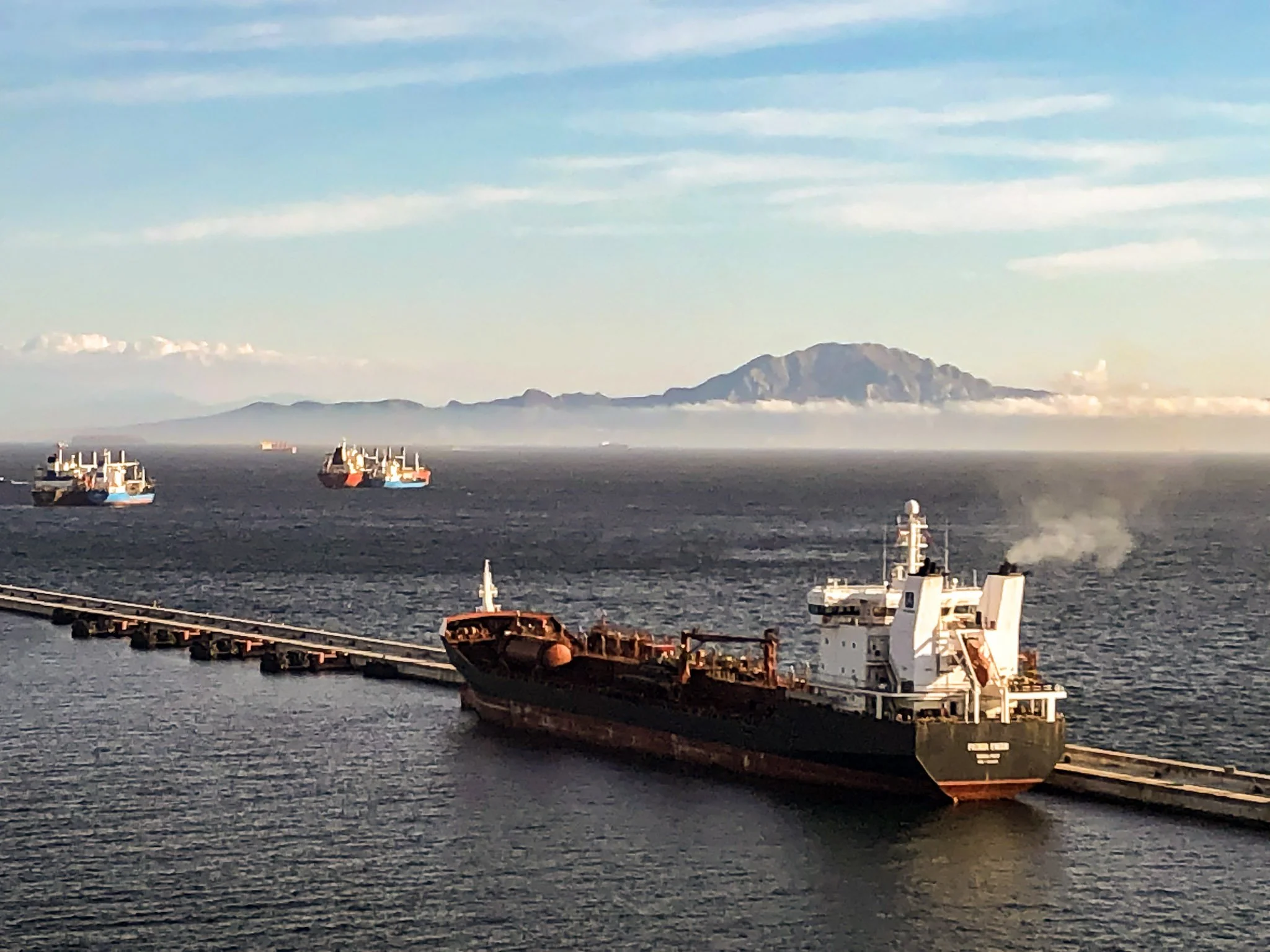
Photo - D. Smith
[Originally posted last week]
The current Iranian "closure" of the Strait of Hormuz has dramatically effected worldwide oil prices. Opec Basket, WTI, and Brent crude oil prices have all skyrocketed resulting in higher fuel costs for the shipping and cruise industries. The current primary ship fuel options are:
1. Liquified Natural Gas (LNG) - the cleanest burning fossil fuel. (Only used on about 2% of ships)
2. Marine Gas Oil (MGO) with a Sulfur content of 0.10% or less to comply with the maximum fuel Sulfur limit within Emissions Control Areas (ECAs) or 0.5% Sulfur or less elsewhere. MGO is a cleaner burning "distillate" oil compared to HFO. It is refined directly from crude oil.
3. Heavy Fuel Oil (HFO) combined with exhaust gas scrubbers to remove an amount of Sulfur equivalent to the maximum global fuel Sulfur content of 0.50% or 0.10% within ECAs. HFO is a viscous, thick "residual" oil left over from refining crude oil. Before HFO, vessels were fueled by coal, propelled by sails, or rowed. HFO might be a little cleaner than the coal it displaced. Nonetheless, it typically contains elevated levels of sulfur, heavy metals, and black carbon.
The cruise lines and shipping companies that hedged their fuel prices are more able to "sail smoothly" through the current oil crisis as their stock prices seem to show. Companies that decided to run the risk of a protracted oil price crisis and not hedge their fuel prices are praying that the crisis ends soon. They avoided the cost of hedging instruments and made better profits when oil prices were low, but they are in a different world now where profits are not so certain.
Because HFO is significantly lower in cost than MGO, there will be a lot of financial pressure to use HFO with scrubbers rather than MGO. However, countries around the world are increasingly banning the use of HFO with open loop scrubbers due to concerns related to pH and the amounts of PAHs and heavy metals contained in scrubber discharges to surrounding seawater.
There are recent Iranian threats to also block the Bab el-Mandeb Strait, connecting the Red Sea to the Gulf of Aden, via their Houthi proxy in Yemen. This could force tankers to avoid the Suez Canal, adding significant time and costs to shipments between the Middle East and Europe. This could significantly exacerbate the current Persian Gulf situation and add further turbulence to world oil markets ... effecting stock prices, shipping costs, and cruise prices.
"May you live in interesting times"
Photo by Danny Smith