Environmental Compliance Officer Role on Cruise Ships
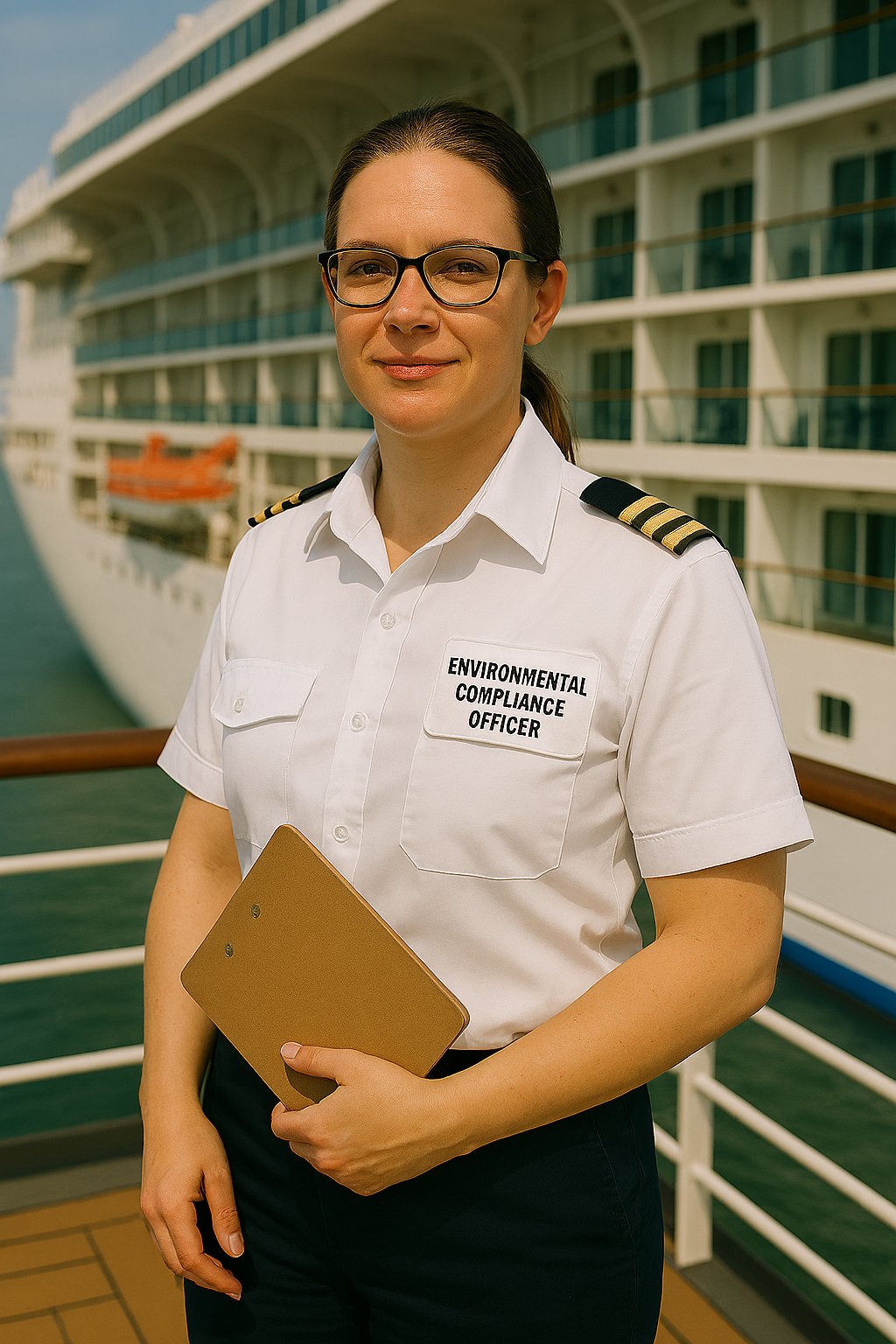
Let’s Reimagine the Environmental Compliance Officer Role on Cruise Ships
The Environmental Compliance Officer (ECO) position is not prescribed in SOLAS, MARPOL, flag state, or classification society requirements. The ECO role has evolved into an unofficial and loosely defined set of practices and norms. That evolution has also been driven by government enforcement actions rather than any IMO definition of the position. The ECO role can look similar from one brand to another, but different company procedures and organizational cultures can result in different functions and practices.
The time has come for us to reimagine the ECO role. I plan to generate a white paper on the topic to challenge the status quo and provide novel ideas on how to deliver improved compliance value on the path ahead. It has often been said that “Insanity is doing the same thing over and over again and expecting different results.” In response to compliance failures, doing more of the same old things in an enhanced way, might only lead to ECO burnout without improving compliance.
In goes without saying that ECOs should have a primary voice in changes to their job description for not only buy-in, but because they know the real job better than anyone else. Captains and Chief Engineers should also have more say on the role than shoreside “experts” who have never served as an ECO. To that end, I am requesting feedback from Captains, Chief Engineers, ECOs and other ship officers for ideas on how to improve the ECO role to provide enhanced compliance value. I plan to capture your visionary ideas within the proposed white paper. Its contents could foreseeably contribute to IMO, flag state, class, and company compliance strategies. It could also inform the courts and DOJ as they consider what remedies to impose in the context of future enforcement actions.
Here are 3 questions and thoughts to spur your brainstorming:
1. ECOs are typically charged with the monotonous, time-consuming, and never-ending task of checking spreadsheets, records, data, and log books for compliance errors and trends. In 2026, the trend is a shift from manual data checking to "human-in-the-loop" oversight of AI systems to do all of this faster and with greater accuracy. With electronic logs increasingly replacing paper logs, this is a “no-brainer.” AI can also be used to analyze scanned copies of paper logs by utilizing Optical Character Recognition (OCR). All of this can better equip an ECO to prevent non-compliances and identify trends.
2. ECOs are often expected to have no operational duties onboard. Is it time to rethink that? An ECO can add strategic value to complex voyage planning and waste management processes. We need to make sure that the ECO is not viewed as a “Political Officer” onboard as in “The Hunt for Red October!”
3. Should an Enterprise Risk Management system drive ECO Duties?
I look forward to your feedback!